Friday, 4 December 2015

Respite Care is very important to family caregivers

With regards to the most up-to-date statistics, about 83-percent of long-term health care inside the U.S. is offered by unpaid members of the family. Whilst it may not have an impact on you direct right now, the probability is someone you know is caring for an elderly or infirmed relation.

Family care providers unquestionably are safeguarding the authorities as well as insurance agencies billions of dollars each year and go mostly overlooked. Carers play various functions for their charges, from accountant to maid as well as personal assistant to nurse. It really is a nonstop struggle with everyday variations thus there isn't any “normal,” especially if caring for someone with a evolving deteriorative ailment.

The phrase, “caregiver” commonly brings to mind ideas of an grownup child looking after a senior parent, yet that’s not necessarily the only situation. Mothers and fathers of disabled children, grandfather and grandmother, or possibly sisters and brothers taking care of an infirmed or elderly brother, are all coping with comparable scenario - way too much to manage and never enough aid.

Carers quite often have problems with long-lasting exhaustion, psychological anxiety and broad-reaching financial trouble. In time, attempting contend with all this can catch a person, triggering severe medical problems. The coordinators behind the website Caregiveraction.org have stated November as National Family Caregivers Month aided by the 2015 concept of “Respite: Care for the Caregiver.”

The corporate notes that a lot of caregivers believe respite is a luxury and a huge number even see it as self-centered. Although seeking a option to decompress continually should really be made a objective.

Balancing a single property, a job including a personal life can be hard enough, when you’re executing it for 2 families it might break even the most resilient of individuals very fast. Many caregivers pull double duty to be able to cope with their own homes and families while seeing to the doctor visits, medicine routines, physical rehabilitation, as well as other needs of their caregiving charge.

That persistent state of stress might bring on long-term medical problems. It’s crucial that care providers take good care of themselves also, set-aside time to rest, eat correctly, and also seek out assistance if no other family is accessible to help out.

There are a selection of agencies with sources there for assist with respite care. Take note, however, that generally there is not any insurance plan or Medicare / Medicaid protection for these particular providers and the fees must be absorbed by the affected person or carer.

Financial stress is among the most dominant difficulties for family care providers. Many either lose their jobs on account of frequent absences or even have to quit to be able to provide full-time health care. And, if the patient has small cash flow or some other sources, the caregiver picks up the fiscal slack, paying out what they have to make sure bills are paid out.
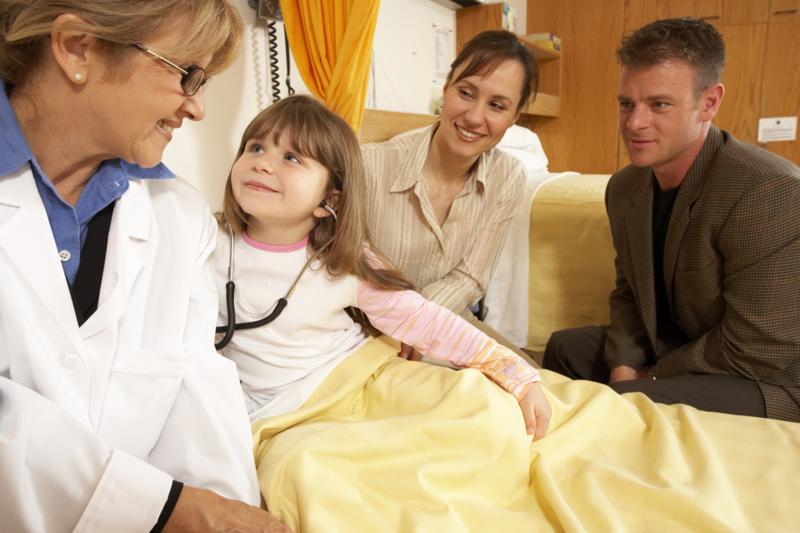


If you know someone who has not too long ago become a family care provider, please take into account that they may have a distinct list of priorities than before. Based on the circumstances, it's quite possible their life centers now around the man or woman for whom they offer care. They are certainly not in the position to drop everything and go shopping or out to dinner at a moment’s notice. Be patient and supportive.

Naturally you will find people who gives the family caregiver a negative name. Any person who does this out of some sort of requirement for economic settlement or frequent personal praise won’t be seen as anything but self-aggrandizing and even reprehensible.

There's no beauty or martyrdom in caregiving. It’s emotionally depleting and physically tiring, especially when your family member is crictally ill. The anguish of watching a friend or relative whither away is like nothing you can possibly imagine without having first-hand experience.

Do what you may have to do to take a little time for yourself every day. Remember you’re doing the very best you can and please accept help whenever it’s offered.

Tuesday, 3 November 2015

United kingdom is the top place all over the world to die, as outlined by end-of-life care index

Integration of palliative care in to NHS and strong hospice motion amid causes of Britain ranking first in study of 80 countries around the world

The United Kingdom is the number one location globally in which to die, based upon an analysis examining end-of-life care in 80 countries around the world.

The combination of palliative care in to the NHS, a powerful hospice movement essentially backed from the charity community, technical staff as well as deep community engagement are among the list of reasons specified by the Economist Intelligence Unit (EIU).


The upper echelons of the index are taken over by rich Eu, Asia-Pacific along with north American nations. Australia is second, New Zealand third then Ireland and Belgium finalise the superior five.

Annie Pannelay, of EIU healthcare, exclaimed: “A strong marker within our index is the method of getting dedicated palliative health care personnel and this is definitely where the United kingdom scores very well. The United Kingdom has a prolonged reputation for giving treatment in palliative health care. One other super strong marker is the approach that the destinations do have an idea for palliative health care. It means they really are on the dynamic of gauging development and improving.”

The United States comes in ninth in the index. Taiwan is the highest ranking Asian country, placing sixth, while India along with China position 67th and 71st respectively. Their performances were discussed as concerning regarding their sizeable populations, with China of specific concern on condition that “the impact of the one-child law, generally leaving folks tending to two parents and then four grandparents, can result in a great deal more requirement for outside solutions to grant support”.

Amongst the locations that fare well regardless of being considerably less prosperous along with having considerably less well developed health care systems are Mongolia and Panama, 28th and 31st on the index respectively. Mongolia’s performance was influenced by an individual medical doctor that has motivated a rise in palliative treatment.

Despite the UK’s top ranking, the study’s authors express it is “still not supplying ample services for every citizen”. They emphasize an investigation by the parliamentary and health service ombudsman into complaints concerning end-of-life care and attention, printed in May, which brought up problems which include inadequate symptom control, low communication and planning, failures to deal with the requirements the dying, poor out-of-hours services along with setbacks in medical diagnosis and referrals for treatment.

Pannelay announced: “There are a couple of problems but there is an agenda to further improve and also the single fact that there is a parliamentary report on that and it’s accessible publicly means a lot - that means the UK is working on it.”

Advertisement

Great Britain obtained the highest score in the indicator determining financial burden to sufferers, articulating that 80% to 100% of end-of-life health care services are paid for by sources other than the patient, a lot of it from charity funding.

The authors praise the Dying Matters Coalition created by the National Council for Palliative Care charitable organization in the UK to stimulate people to speak more freely about death and make plans for the end of life.

The EIU states the UK’s resources, such as those of various other countries, will be stretched in the future by an an ageing human population and non-communicable diseases which includes cancers, dementia and diabetes.

The creators state latest third-party research shows a significant link in the use of palliative care and treatment cost savings. In spite of evidence of the economic positive aspects, they point out that just about 0.2% of the funds given for cancer research in the UK in 2010 went to study into palliative care, whilst in the US it was 1% of the National Cancer Institute’s appropriation.

The Quality of Death Index, commissioned by the Lien Foundation, a Singaporean philanthropic organisation, is dependant on qualitative and quantitative indicators and took in interviews with more than 120 palliative care industry experts from throughout the globe.

The UK came top in the only previous index, created in 2010, though that was confined to 40 countries and the criteria has since been refined.


Thursday, 17 September 2015

Many more male health care staff members needed, says providers' chief

Far more male care workers are required to take care of older people, the chief exec of Care England has said. Prof Martin Green informed BBC Radio 4's Today programme that the govt ought to do a lot more to sign up men into front-line adult social care positions. He stated that as an increasing number of men are living for a longer period, more men are needed for their personal care.

The Dept of Health claimed it will always encourage more people of either sex to become carers. "We have an ageing human population and many individuals who receive care into old age now are men," claimed Prof Green. "The majority of carers are women. With regards to private care specifically, some men want this to be carried out by a male instead of female."
Care England claims it is the major representative body for independent care providers in England.

Its associates contain single care homes, small local organizations, national providers and not-for-profit voluntary organisations and associations, giving services for older people and people with long term ailments, learning disabilities or mental health issues. It comes down to each and every citizen analyzing their own pre-conceived notions of who delivers care Prof Martin Green, Care England


Prof Green claimed that "entrenched societal perceptions" stop males from thinking about care work. "The problem is people always view caring jobs as being female roles. We should make society be aware that all people have the potential to become a carer," he stated. Government figures demonstrate 84% of carers across the field in England are females, and only 16% are men. This number has stayed stationary since 2012. "The govt could possibly be much more organized in their strategy," he went on.

"They could make sure that each and every school is aware that care career pathways are for men as well as women, they can show much more men in govt info on care positions, and they should put much more focus on reaching out to males when they promote care role vacancies. "This is about each and every arm of government working to alter the belief that care jobs are just for ladies. "More importantly, it's about each and every citizen examining their own pre-conceived notions of who gives care."

Eighty-year-old Jonathan Ryan from a residential home in Surrey has severe mobility difficulties. He informed Today he wished there were much more males taking care of him: "From a personal point of view - having showers and baths and personal washing and things, I would much rather be washed and bathed by a fellow male. It tends to make me feel uneasy. I would much prefer a male, I have to tell you." For Mr Ryan, it's not only a matter of personal choice - he also claimed he feels in safer hands with men.
Following a recent severe fall, Mr Ryan said that it was the sheer power of a big male carer that ensured he was lifted out of an uncomfortable position. "He basically dragged me gently out but securely and then he got behind me correctly and lifted me up."

One of the largest not-for-profit care home providers in England, Anchor, states having no male carers is storing up trouble for the future; they have began a recruitment drive in schools and colleges to bring in more men into the positionResearch by social care focused charity Skills for Care states males are usually turned off from becoming carers due to belief that it's a career with unpleasant routine duties.

Additional circumstances include a bad look at the sector's income and salaries, conditions of service, and opportunities to grow. Mark Hand works as a carer. He says that his job "raises a few eyebrows" but his sex does not prevent him or his female co-workers from carrying out their duties efficiently. "It at times needs a little time to break down barriers when you are working with a woman as a man and vice-versa," he said. "But so long as you display a lot of love, dignity and you treat them with respect then those limitations do come down and they're very content for you to care for them."

A Dept of Health representative mentioned: "We would entice more people, including men, to join the social care workforce. "There is a large range of opportunities for both men and women and we've released assistance on just how care companies can attract more men to the profession. "Hundreds of thousands of care workers will benefit when we introduce the National Living Wage, which will also help encourage more people to join the sector."

Thursday, 20 August 2015

Numerous care homes may very well shut down due to new national living salary, George Osborne informed

Five of care home corporations that manage 1,200 residences all over the United kingdom had written to Mr Osborne to inform that a big residential care home provider will most likely collapse in the following 12 months to 2 years as a consequence of transformations

Palliative care homes will likely be influenced to shut down under as a result of Government promises to create a national living wage, 5 primary companies have cautioned in letter to the Chancellor George Osborne.

5 of palliative care home companies of which in all manage 1,200 properties over the UK written to Mr Osborne to warn that a important palliative care home provider will likely fail in the next 12 months to two years due to changes.

Beneath strategies declared by the Chancellor inside the spending budget, workers aged over 25 could be paid no less than £7.20 an hour from April 2016, increasing to £9 per hour by 2020.

The care home corporations - which look after 70,000 old folks, a 5th of these in homes all over the UK - pointed out the brand new national living wage will cost the market an extra £1billion per year by 2020.

Personnel costs depict more than 60 per cent of the full costs of old age care and attention - though for far more complicated care this can climb to 80 %.

Palliative care residences in England at present take care of over 400,000 seniors.

The previous giant downfall was Southern Cross, Britain’s largest residential care home operator with 750 homes, which collapsed in 2011 because of a drop in earnings and also a £250million rental expense.


A downfall of a significant organization may bring about many frail senior citizens being required to look for assistance in the NHS.

This would definitely stretch the NHS beyond the difficulties imposed by occasions for instance seasonal flu episodes, or winter beds pressure.

Chai Patel, chairman of an enterprise that manages 225 residential care homes, said: “We have constantly backed the Living Wage and believe that it's a acceptance of the wonderful work that carers are executing. The fact is that, if the federal government doesn't fund this, it wouldn't be affordable.

“The expense of the Living Wage would mean that we might witness hundreds of residential care homes closing, resulting in thousands of older individuals with no dwelling."

Martin Green, leader of Care England, a trade body for independent care providers, added: “The care industry embraces the National Living Wage and it has long campaigned for it to be introduced.

“However, it isn't sustainable for us to fulfill the elevated price of care when local authorities already are paying well below the genuine cost of delivery.

“We want to work along with the Government to locate a solution that will ensure that the 400,000 individuals the palliative care sector supports can continue to reside in a safe and comfortable environment in their older years.”

A Government representative mentioned: “The National Living Wage will benefit thousands and thousands of residential care employees who'll see their pay increase.

“The entire costs of providing social care will be regarded as part of the Spending Review later on this current year and we're working together with the care market to learn how the adjustments will affect them.”

Thursday, 2 July 2015

Charity demands improved GP training to lift palliative health care

GPs 'come with a very important task to engage in' in recovering palliative care, even so they will need to acquire more training to make certain sufferers with critical circumstances get the care and attention and support needed, charity Marie Curie has alerted.

Select Healthcare Group are skilled in offering the most effective Palliative Care, together with Respite Care, Dementia Care, Brain Injury Units, Novero Care, Elderly Mentally Infirm and far, far more. For additional information pertaining to the services and also to discover a great number of care homes nationwide, drop by Select Healthcare Group.

The charity’s Triggers for Palliative Care survey - backed by the RCGP - highlights several hints doctors ought to look out for that can assist recognize if a individual requires palliative care.

A great deal of doctors usually do not gain adequate guidance, contributing to them ‘to quite often fail to see the opportunity to take into account regardless of whether there is a palliative care need’, the report states.

It found that affected individuals with heart malfunction, COPD, dementia, final stage liver disease, Parkinson’s disease among others are significantly less likely to acquire palliative care as opposed to sufferers with terminal cancer.

Continuing development of a majority of these ailments are often a lot more erratic compared to most cancers, which has a recognisable drop, and also the report calls for doctors to be made far more aware about the clues.

GP part within palliative health care

Within a shared report within the report’s foreword, leading health firms - such as RCGP, Royal College of Physicians, Royal College of Nursing as well as Association for Palliative Medicine - promised to engage in a more significant role within boosting services meant for critically ill patients.

‘We recognize that a whole lot remains to be performed to always make sure that anyone who can benefit from palliative care and attention gets it,’ they authored, inside a co-signed declaration.

Dr Jane Collins, leader of Marie Curie, documented: ‘Every single calendar year approximately 110,000 people in the united kingdom don’t get the palliative attention that they will be needing.

Start off palliative care and attention earlier

‘Many men and women that could possibly reap the benefits of palliative treatment earlier in their illness lose out considering that medical doctors, patients as well as their family members usually do not comprehend when it's essential and even erroneously imagine it is simply for individuals that are in the ultimate weeks or maybe days of their life.’

Market research commissioned from the charitable trust learned that 2 in five (39%) of 500 medical experts throughout the uk believed that too little relevant experience was ‘a barrier to meeting the requirements of terminally ill people’.

Dr Catherine Millington-Sanders, clinical lead for terminal attention within the RCGP and furthermore Marie Curie, reported: ‘GPs have a major job around taking care of sufferers in the last days, months and years of their life - and also this report reveals that the more help support family GPs have in supplying palliative care and attention, the larger the gains are for our sufferers.’

Tuesday, 2 June 2015

End-of-life attention disappointing people - health ombudsman

Huge numbers of perishing persons are being overlooked by awful end-of-life treatment provision, the enterprise that makes end actions with regards to NHS complaints in England has documented.

Select Healthcare Homes, recognise any patient must receive the very best quality of treatment constantly and most content end-of-life experience as they possibly can. The staff pay undivided attention to people in need of Palliative Care and make certain communication is vital among themselves, patients and their families and loved ones. For more information on any one of their fantastic care homes, check out Select Healthcare Group.

The health ombudsman's report displays "heartbreaking" cases where patient's suffering might have been prevented or even much less.

In one case in point, an individual had endured 14 tough tries to have a drip positioned in the time of his last hours.

The government proclaimed raising end-of-life care was a main priority.

The Parliamentary and Health Service Ombudsman has looked into 265 grievances with reference to end-of-life attention in the past four years, maintaining just over one half of them.


Catalogue of failings

Its Dying Without Dignity write up cited it had came across a large number of cases of undesirable interaction, in addition to bad pain control together with inadequate out-of-hours services.

1 mother told the ombudsman that she needed to contact an A&E medical professional to come and present her son a lot more relief of pain due to the fact team members on the palliative care ward he had stayed on had failed to deal with their wants.

In an extra scenario, a 67-year-old male's loved ones discovered his terminal cancer diagnosis by way of a hospital note - just before he was aware himself. This "neglected every single principle of established sound practice in breaking poor news", the review expressed.

"There was an unnecessary hesitation when making a diagnosis," it additionally mentioned. "A much earlier diagnosis should have made options for better palliative treatment."

Ombudsman Julie Mellor divulged to Radio 4's Today the document produced "truly painful reading".

The Ombudsman on top of that encouraged the NHS to learn lessons from the analysis, including: "The casework indicates that so many individuals are dying without dignity.

"Our studies have discovered that patients have spent their ultimate days in unneeded agony, individuals have incorrectly been turned down their want to die at their own home, and that poor verbal exchanges between NHS staff and families means that nearest and dearest had been unable to say their goodbyes to their loved ones."


Last moments

Roberta Sullivan's husband John was diagnosed with untreatable bile duct cancer in 2012.

He was told he only had a few days or weeks to live, although his condition deteriorated quickly overnight

Mrs Sullivan told the BBC she was not capable of being with him in his final moments for the reason that nursing employees had attempted to get in touch of her on an incorrect number during the early hours of the morning.

She pronounced: "By the time we had got to him they informed me 'we are extremely sorry but your husband has just passed away'.

"And I was told that you know we did attempt to contact you.

"But when I phoned my employer she said the hospital phoned twice in the night on my work phone number to try and contact you.

"I was a bit amazed by that. I waited until eight o'clock and spoke to the sister and explained it to her.

"And she stated the nurse is so remorseful. She's devastated that she accidentally phoned the wrong number and then sister apologised."


'Daunting incidents'
Macmillan Cancer Support chief executive Lynda Thomas expressed: "The review points out destructive instances of too little choice at the end of life that are totally unacceptable.

"If we are to further improve the current situation, we are going to have to see a dramatic development in co-ordination of care, and increased integration of health and social care."

The chief inspector of hospitals at the Care Quality Commission, Prof Sir Mike Richards, claimed the organisation had seen instances of great end-of-life care, but in addition instances where it was not given enough priority.

He explained the CQC would carry on and showcase those services which were failing.

A Department of Health spokesperson documented: "These are appalling cases - everyone should get top quality health care at the end of their lives.

"The five focal points for end-of-life care we introduced emphasise that medical doctors and nursing staff must include patients along with their families in decisions with regards to their care, regularly look at their treatment solution and reveal patients' choices to ensure their wishes are recognized.

"NHS England is focusing on making these focal points a real possibility for everyone who demands end-of-life care."

Tuesday, 19 May 2015

Lawyer chief demands lethal accident inquiries for any children who die in residential care

THE head of a main lawyers’ company has required a fatal accident inquiry (FAI) to be vital each time a child dies while in residential care.

For additional details on Residential Care Homes, or to discover a numerous Respite Care facilities, head over to Select Health Care.

James Wolffe, dean of the Faculty of Advocates, is predicted to give his discussion to MSPs today on Holyrood’s justice board which is reviewing planned changes of the pre-existing procedure of analyzing unexpected deaths.

The Investigations into Fatal Injuries and Sudden Deaths Bill states that an investigation should only be vital if a child has died while in a secure residential unit, however in a submission to the committee Wolffe suggested any death of a child in the care of the state should quickly be subject to an FAI.

Retired senior judge Lord Cullen of Whitekirk stated this recommendation in his assessment of FAI law, which accumulated the idea of the legislation currently going through Holyrood, and Wolffe exclaimed it really should be involved in the Bill.


“Lord Cullen’s advice on this challenge needs to be carried out in full by including within the obligatory categories deaths of children being maintained in residential facilities,” explained Wolffe whom agreed on Cullen’s proposition that a FAI should not be essential if a child passed away whilst in foster care or while being looked after by family members.

“In its July 2014 discussion paper the Government drew a variation in this context around children maintained in residential housing that is not secure facilities and those in secure accommodation, specifically that residential facilities can not detain children against their will.

“We don't take into account that difference is completely convincing to warrant departing from Lord Cullen’s proposition.”

He added: “Lord Cullen considered that the dividing line around cases when an FAI needs to be mandatory pertaining to a child in care should leave out youngsters in kinship or foster care, but should include youngsters in residential organisations. We share his view that this is the proper division.”

An FAI happened in 2011 into the fatalities of Neve Lafferty, 15, as well as Georgie Rowe, 14, who jumped to their deaths off the Erskine Bridge in a dual suicide soon after running away from their residential house in October 2009.

The girls, each from troubled and disturbed family backgrounds, had a reputation of self-harm, attempted suicide and heavy alcohol and drug abuse, including heroin use and uncontrolled drinking.

The sheriff’s succeeding report drastically criticised the Good Shepherd Centre in Bishopton, where they lived in an open unit, for failing to protect them.

However beneath the existing plans such an FAI would not be obligatory since the girls were in an open unit.

Underneath the active law only deaths in custody and at work should be subjected to an FAI and it's also up to the Lord Advocate if an FAI takes place into the passing away of a child in care.

Wolffe agreed with the majority of the other propositions in the Bill, that include provisions to hold FAIs into Scottish inhabitants who have died abroad.

He also supported intentions to have specific sheriffs hear FAIs, taking them right out of the hands of the more junior summary sheriffs, but he talked about considerations that this move might mean longer waits for loved ones of the passed - just one of the vital troubles the proposals desired to correct.

Wolffe stated in his submission: “The faculty considers that there is merit in the power to employ “specialist” sheriffs in FAIs. The faculty has some worry concerning the use of summary sheriffs in FAIs. Although this will allow for flexibility - and might aid in the goal of securing that queries will be held without delay, the usage of summary sheriffs would seem to run counter to the proposal for “specialist” sheriffs.

“Given the restricted legislation of summary sheriffs, there might be a conception that an inquest before a summary sheriff is being addressed with less importance than an investigation before a non-summary sheriff.”

FAIs are a cornerstone of the Scots legal operation and were created in 1895. They are fact-finding exercises completed in the public interest into some non-suspicious abnormal fatalities to locate any flaws in procedure.